An attractive garage floor adds value and usability to any home or commercial space. One of the best ways to establish a long-lasting and beautiful floor surface is through Garage Floor Epoxy. This coating resists wear and tear to quite an extent while also providing a glossy and attractive finish, making it well-suited for homeowners and business owners who want to introduce greater value to the flooring in their garages.
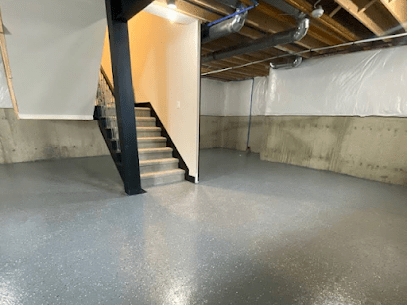
The Advantages of Garage Floor Epoxy
There are many advantages to applying Garage Floor Epoxy beyond the visual aspect. Garage Floor Epoxy is highly smooth and graceful and adds elegance to the physical look of the garage. The coating has further advantages in the following elements:
- Durability and Strength: On account of its hardness and durability, epoxy coating allows a floor to resist wear and give it a longer life. Wear-and-tear shall never affect such floors, subject to heavy vehicle traffic, tool use, or storage units, leading to cracks or chips.
- Chemical and Stain Resistance: Nothing gets through the epoxy surface, so oil or gasoline spills and other hazardous chemicals can also stain. It can, therefore, be used in automotive workshops or home garages.
- Low Maintenance: Dust, dirt, or moisture do not stick to the seamless surface; therefore, clean-up procedures are not at all burdensome. Keep a good mop or broom nearby, and you’re set for life.
- Slip Resistance: Many epoxy coatings can be infused with anti-slip additives that offer greater levels of traction and reduce the chances of accidents.
- Increased Lighting: The luminous surface casts a bright light in the area, enhancing visibility and making the space more inviting.
The Process of Applying Garage Floor Epoxy
Garage floor epoxy application includes surface preparation, epoxy coating application, and curing. Only properly laid surfaces and properly applied coatings can yield durable, long-lasting, and good-looking finishing.
- Surface Preparation: The garage floor cleaning has to be carried out thoroughly, with complete removal of dust, grease, and any existing coat. From there onward, all cracks or imperfections are to be repaired using a concrete patch.
- Etching or Grinding: Culture etching or mechanical grinding is to be used to roughen the floor for the sake of good adhesion. This process opens up the pores of the concrete so that the epoxy can bond.
- Prime: Priming will improve the adhesion of the epoxy and assist in the elimination of air bubbles. It additionally seals the concrete, reducing the chance of moisture issues that might weaken the coating.
- Epoxy Coating Application: Apply the epoxy mixture evenly across the surface using a roller/brush, ensuring complete coverage. For an added decorative effect, sprinkle some colour flakes onto the wet epoxy before it sets.
- Cure and SealThe epoxy needs to be given a full treatment, which typically includes a 24–72 hour period before any use. The addition of a topcoat enhances durability, protects from wear, and adds gloss.
Conclusion
For homeowners and businesses wanting enhanced durability, safety, and aesthetics for their garage floors, investing in Garage Floor Epoxy is a wise choice. The coating will provide benefits in the long run and will be well worth it in any interior space. Whether in a home garage or commercial workshop setting, epoxy flooring offers an I’m-not-going-anywhere kind of look that is forever useful and polished.

 Greenside Epoxy Floor Coatings